Libya has attracted hydrocarbon exploration since 1956, when the first oil well was drilled onshore in the Sirte Basin. There were multiple concessions to Esso, Mobil, Texas Gulf and others, resulting in major oil discoveries, by 1959.
In the 1970s, Libya initiated a program under which the government either nationalized oil companies or became a participant in their concessions, production and transportation facilities. The National Oil Corporation (NOC) was established by Law No. 24 of 1970 to replace the General Libyan Petroleum Corporation
Oil and Gas E&P is carried out by the National Oil Corporation subsidiaries. These activities cover wide areas both onshore and offshore. The NOC has a grid of onshore oil, gas and product pipelines, crude oil export facilities and a gas pipeline.
The NOC is wholly owned by companies that explore, develop and produce oil and gas, in addition to internal and external marketing companies. It also has joint contracts with international companies specializing in these fields.
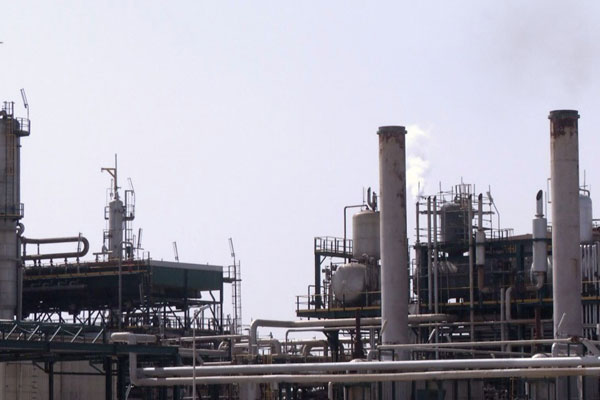
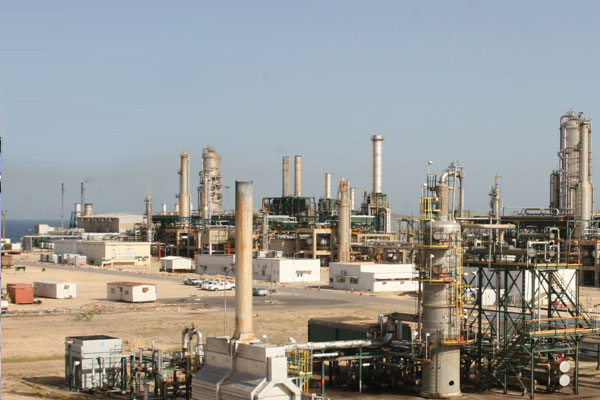
The NOC also has a group of companies to refine and manufacture oil and natural gas, which operates several refineries. The most important of which are Ras Al Anouf Refinery and Al Zawia Refinery, and a group of factories that produce ammonia, urea and methanol at the Brega petrochemical complex. These complexes also include a natural gas liquification plant, the ethylene plant and the polyethylene plant high density and low-density complex at Ras Lanuf.
The National Oil Corporation (NOC) also owns service companies that drill and maintain oil wells, provide all materials and tools used in drilling operations, supply, install and maintain oil and gas pipelines. Additionally, the NOC establish and maintain oil and gas reservoirs, conduct technical and economic studies, procurement of materials, equipment and training.
The National Oil Corporation (NOC) follows the Libyan Oil Institute, which conducts technical tests and tests for the stages of exploration and production of oil and its derivatives. The NOC also conducts quality control tests and issues certificates, evaluates patents of inventions and licenses, as well as local and international scientific publishing tools.
In the field of manpower development, the National Oil Corporation (NOC) supports the oil industry with national qualified standards. We are able to provide the formation of specialized and technical facilities for the operation and maintenance units through its institutes and centers, the most important of which is the Petroleum Institute for Rehabilitation and Training and the Qualified Training Center.
The current Chairman of the National Oil Corporation (NOC) is Mr. Farhat Ben Gdara , who was appointed on July 13, 2022.
The Libyan National Oil Corporation Houston Branch (LNOC) was inaugurated on 9 May 2019.which was announced by the Former Chairman of National Oil Corporation the Eng.Mustafa Sanalla in Houston on 02 Nov 2017.
Libyan NOC Houston Branch will support NOC to become a global leader as an integrated international energy Company. This will be achieved by assisting with the coordination, identification and evaluation of discovered and undeveloped NOC assets.
Strategic planning is of paramount importance to NOC and with Libyan NOC Houston Branch‘s support a structured organization will be created to execute timely and efficiently the plans which are jointly developed within Libyan NOC Houston Branch and NOC.
Continuously strive, through sustainable development and training, best in class professional procurement services by offering a competitive, responsive and quality product.
Our management and leadership embrace a safe working environment and in a truly collaborative approach with our clients, suppliers and service providers, we aim to deliver real value to the industry.

Mr. Masoud Suleiman Mousa was appointed as the Chairman of the Libyan National Oil Corporation (NOC) in 2025.
Mr. Mousa has extensive experience in the Libyan oil and gas sector, having served as a member of the NOC Board of Directors and in senior management roles in several major Libyan oil companies, including Sirte Oil Company. He has a strong technical background as a petroleum engineer, combined with managerial expertise, which has been key to his leadership in the country’s largest energy organization.
Throughout his career, Mr. Mousa has been involved in field development, production management, and reservoir operations, contributing to the optimization of Libya’s oil and gas resources.
Since his appointment as Chairman, Mr. Mousa has focused on increasing oil production, enhancing transparency within NOC, attracting international investment, and modernizing corporate operations. He has launched the first licensing round for exploration in Libya in nearly two decades, aiming to expand the country’s oil and gas sector while ensuring sustainable and transparent management.
Mr. Mousa holds a Bachelor’s degree in Petroleum Engineering and a Master’s degree in Petroleum Engineering.

Mr. Anis Elfesatwi is the General Manager, Libyan National Oil Corporation Houston Branch,
Mr. Anis was appointed to the post of General Manager of Libyan NOC Houston Branch in Houston, Texas, USA, a Branch of National Oil Corporation (NOC) of Libya, in Oct 2025.

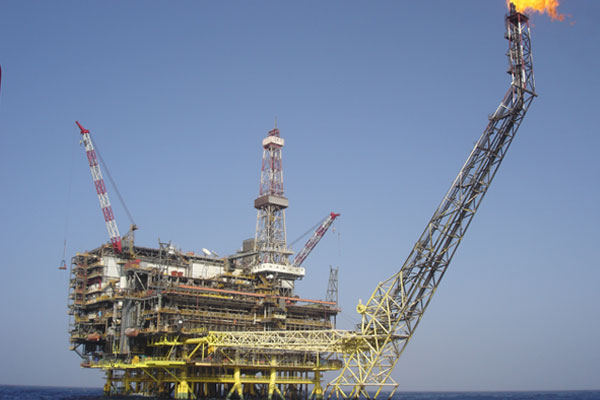
Several of our NOC subsidiary companies are specialized in the offshore sector where existing facilities including fixed platforms require upgrading, redevelopment and expansion.

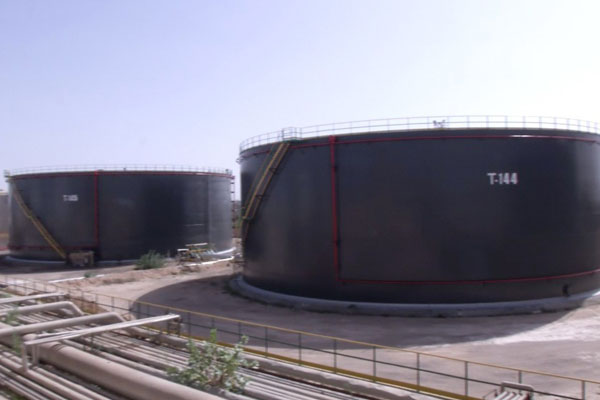
The NOC has considerable onshore facilities and assets spreading across the energy sector, ranging from O&G, petroleum, liquification and refining.

Part of the future plans for the NOC and its subsidiaries will be to exploit the tremendous natural reserves which are available. This will be achieved through new technologies and on-going studies.

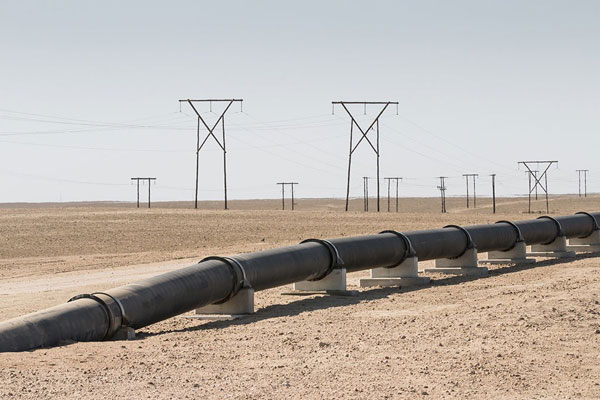
Modernization and upgrading of the existing pipelines is ongoing and the NOC will continue to identify priorities to enhance output.

All of our NOC subsidiary companies are operating existing facilities at various levels of capacity. New downstream facilities will need to be introduced to deal with the future demands of production which is part of the NOC’s vision.

A major business for the NOC is their lube and chemical facilities where the capacity is there to be increased along with overall output.